

Civic technology organisation, BudgIT, has raised concerns over the Federal Government’s N68.32tn 2026 budget, describing it as ambitious but largely unrealistic given the country’s weak revenue base, widening fiscal deficit and growing debt obligations.
In a analysis of the approved fiscal plan, BudgIT warned that the record-breaking budget faces a significant credibility challenge as projected expenditure exceeds expected revenue by N31.45tn, creating a fiscal deficit equivalent to 6.41 per cent of Nigeria’s Gross Domestic Product (GDP), more than double the 3 per cent threshold prescribed by the Fiscal Responsibility Act.
The organisation noted that with projected revenue standing at N36.87tn against total expenditure of N68.32tn, the government can only finance about 53.9 per cent of its spending programme from actual revenues. Consequently, nearly 46.1 per cent of the budget would have to be financed through borrowing and other debt instruments.
According to BudgIT, the figures reveal a deepening structural imbalance in Nigeria’s public finances, where expenditure growth continues to outpace revenue generation despite repeated calls for greater fiscal discipline and realistic budget assumptions.
“The numbers point to an unambiguous conclusion: Nigeria’s challenge is not merely revenue generation but revenue realism, expenditure discipline, sound debt management and institutional credibility,” the organisation said.
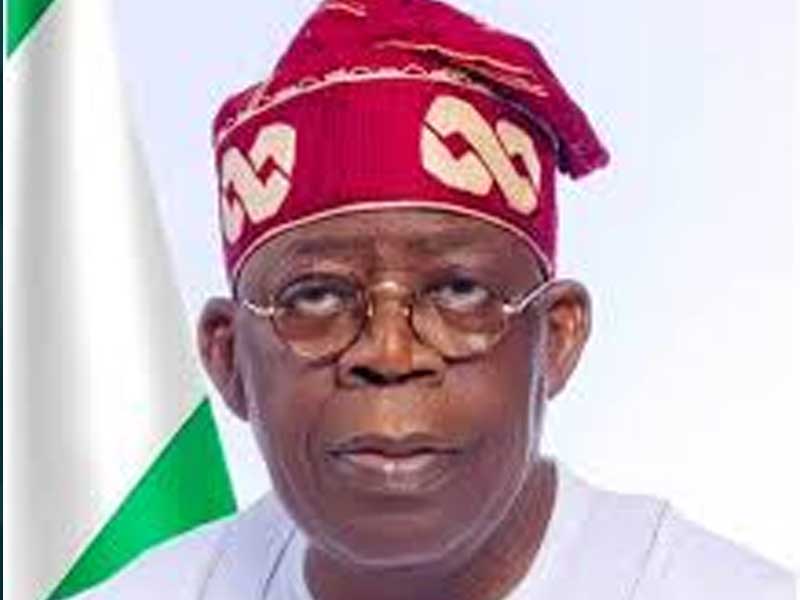
The N68.32tn budget became Nigeria’s largest-ever fiscal plan after the National Assembly approved an upward revision from the initial N58.47 trillion proposal submitted by President Bola Ahmed Tinubu. The revision added approximately N9.09tn to the original proposal following a request by the President.
While government officials have maintained that the expanded budget is designed to accelerate economic growth, infrastructure development and social investments, BudgIT questioned the sustainability of a spending plan that relies heavily on debt financing at a time of increasing fiscal pressures.
The organisation observed that years of weak revenue performance, coupled with persistent challenges in budget implementation and public financial management, continue to undermine confidence in government spending plans.
It stressed that effective budget execution requires more than the publication of expenditure figures, arguing that transparency in fund releases and timely disclosure of budget implementation reports are essential for accountability.
“Approved budgets do not automatically translate into development outcomes,” BudgIT noted. “In many cases, actual releases remain opaque, making it difficult for citizens and oversight institutions to track implementation and assess performance.”
Despite concerns over fiscal sustainability, the organisation acknowledged that the 2026 budget reflects an expansionary policy stance, with capital expenditure projected at N32.28tn, representing 47.13 per cent of total spending. This allocation suggests a stated commitment to infrastructure development and long-term economic growth.
However, BudgIT warned that the benefits of increased capital spending could be constrained by the growing burden of debt servicing.
According to the analysis, debt service obligations are projected to consume N15.8tn in 2026, accounting for approximately 23 per cent of total expenditure and nearly 45 per cent of projected government revenue.
The organisation said the development significantly limits fiscal space available for investments in critical sectors such as health, education and social protection.
A review of sectoral allocations further revealed what BudgIT described as a persistent mismatch between public spending priorities and national development needs.
While the security sector received N6.98tn, representing 10.21 per cent of the budget, allocations to health and education remained considerably below both international and regional benchmarks.
Health received only 5.2 per cent of total expenditure, far below the 15 per cent target established under the Abuja Declaration, while education accounted for approximately 4 per cent of the budget.
BudgIT argued that continued underfunding of the two sectors poses serious risks to human capital development, noting that Nigeria’s healthcare system remains heavily dependent on out-of-pocket spending while the education sector continues to grapple with an estimated 18 million out-of-school children.
Speaking on the budget outlook, BudgIT’s Head of Research and Policy Advisory, Engr. Adejoke Akinbode, said the fiscal plan reflects a government attempting to balance economic growth ambitions with difficult fiscal realities but remains constrained by longstanding structural inefficiencies.
She warned that without fundamental reforms to strengthen revenue mobilisation, improve expenditure efficiency and enhance institutional accountability, the current fiscal trajectory could increase economic vulnerabilities and undermine long-term development objectives.
Akinbode also expressed concern that the country’s approach to the next electoral cycle could influence spending priorities.
“Nigeria is approaching an election year, and there are concerns that the budget may bear characteristics of a politically motivated pre-election spending framework designed to maximise short-term visibility rather than long-term national value,” she said.
To address these concerns, BudgIT called on the Federal Government to enforce a strict zero-tolerance policy against extra-budgetary spending and off-book expenditures.
The organisation further urged the executive arm of government to adopt a robust prioritisation framework that channels scarce public resources toward high-impact projects capable of stimulating productivity, improving service delivery and supporting sustainable economic growth.
It maintained that without stronger fiscal discipline, realistic revenue assumptions and greater transparency in public finance management, the implementation of Nigeria’s largest-ever budget could face significant challenges despite its ambitious objectives.