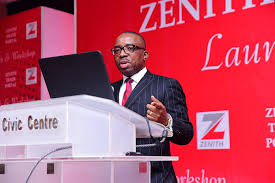



Access Bank Plc has partnered with the Federal Government to accelerate the adoption of Artificial Intelligence (AI) among Nigeria’s Micro, Small and Medium Enterprises (MSMEs), unveiling a new digital platform aimed at helping entrepreneurs improve productivity, expand market access and strengthen business sustainability as the country pursues its ambition of building a $1 trillion economy.
The initiative was announced at the Access Bank MSME Digital Growth Conference held in Lagos with the theme, “AI for SMEs: Scaling Through Digital Tools.” The conference brought together policymakers, financial sector leaders, technology experts and entrepreneurs to explore how artificial intelligence can transform Nigeria’s small business ecosystem and enhance the competitiveness of local enterprises.
A major highlight of the event was the launch of the Access SME Application, an AI-enabled digital platform developed by Access Bank to provide entrepreneurs with tools for automating business processes, improving operational efficiency, accessing financial services, strengthening customer engagement and leveraging data-driven insights to grow their businesses.
Speaking at the conference, the Senior Special Assistant to the President on Entrepreneurship Development in the Office of the Minister of Communications, Innovation and Digital Economy, Chalya Shagaya, said the Federal Government views MSMEs as the foundation of Nigeria’s economic transformation and considers digital innovation a critical driver of sustainable growth.
She said the administration of President Bola Tinubu remains committed to creating an enabling environment that allows small businesses to thrive through technology adoption, innovation and entrepreneurship development.
According to Shagaya, AI has evolved beyond being an emerging technology to becoming a practical business tool capable of helping entrepreneurs automate inventory management, optimise supply chains, generate customer insights and make faster, more informed business decisions without significant capital investment.
“Everyone wants to be an entrepreneur today. You are the ones who will drive the $1 trillion economy that the President has charged us,” she said.
She noted that artificial intelligence is also promoting greater inclusivity within Nigeria’s entrepreneurial ecosystem by creating opportunities for neurodivergent entrepreneurs and reducing operational barriers that have traditionally limited the growth of small businesses.
Shagaya disclosed that President Tinubu has signed Nigeria’s National Artificial Intelligence Policy, which mandates the Ministry of Communications, Innovation and Digital Economy to establish AI and digital capacity-building hubs across the country. She explained that the initiative is designed to equip young Nigerians, startups and entrepreneurs with future-ready digital skills needed to compete in an increasingly technology-driven global economy.
Reaffirming the bank’s commitment to supporting Nigeria’s entrepreneurial ecosystem, the Head of SME Banking at Access Bank Plc, Abiodun Olubitan, described MSMEs as the engine of the country’s economy, noting that the sector contributes about half of Nigeria’s Gross Domestic Product and accounts for nearly 84 per cent of employment.
She said Access Bank remains focused on empowering entrepreneurs through affordable financing, business advisory services and innovative digital solutions that address the evolving needs of small businesses.
According to Olubitan, the newly launched Access SME Application represents a significant milestone in the bank’s broader digital transformation strategy and reflects its commitment to simplifying business operations while enabling entrepreneurs to harness emerging technologies such as artificial intelligence.
“You need to recognise and celebrate your work. Success is not solely defined by becoming a large enterprise like Dangote Group. We must support MSMEs at every stage, from startups to established businesses,” she said.
She added that Access Bank will continue investing in technology-driven solutions that improve financial inclusion, enhance business resilience and provide entrepreneurs with the digital capabilities required to compete effectively in both domestic and international markets.
Also speaking, Executive Director of the University of Lagos Business School, Prof. Sunday Adebisi, underscored the strategic importance of Nigeria’s MSME sector, revealing that the country has between 39 million and 42 million registered MSMEs, representing approximately 96 per cent of all businesses nationwide.
According to him, the sector contributes about 48 per cent of Nigeria’s Gross Domestic Product and provides roughly 84 per cent of total employment, while large corporations—including oil companies and major financial institutions—account for only about 16 per cent of jobs.
Despite these impressive figures, Adebisi warned that nearly half of Nigerian SMEs fail within their first year of operation because of weak business planning, limited access to technology, inadequate market intelligence and poor operational structures.
He urged entrepreneurs to embrace artificial intelligence as a “digital co-pilot” capable of improving operational efficiency, strengthening predictive market analysis, enhancing customer engagement and enabling businesses to respond more effectively to changing consumer behaviour.
Industry experts participating in panel discussions at the conference identified several practical applications of AI that could significantly improve SME performance, including automated customer service, digital marketing, financial management, inventory optimisation, sales forecasting and data-driven decision-making.
The discussions also emphasised that while access to finance remains a critical challenge for many small businesses, digital technologies such as artificial intelligence are increasingly becoming essential tools for improving competitiveness, reducing operational costs and unlocking new growth opportunities.
The conference reinforced Access Bank’s position as one of Nigeria’s leading financial institutions supporting the MSME sector through strategic partnerships, innovation and digital transformation initiatives. The bank said it would continue expanding its suite of digital platforms, financing solutions and business advisory programmes to strengthen the resilience, competitiveness and long-term sustainability of Nigerian enterprises while supporting the Federal Government’s broader economic diversification agenda and the country’s journey towards a $1 trillion economy.