


Weak competition and a highly concentrated market structure are the primary drivers of persistently high cement prices in Nigeria, despite the country’s surplus production capacity, according to a new report by Agora Policy, a Nigerian policy think tank.
In its latest policy insight titled “Market Power and Failure of Competition Policy in Nigeria’s Cement Industry”, the non-profit organisation said Nigeria’s cement pricing dynamics are shaped more by market structure and pricing power than by production costs, contradicting long-held explanations by industry players.
The report noted that although Nigeria achieved self-sufficiency in cement production as far back as 2012 and now has installed capacity well above domestic demand, prices have remained elevated, placing a heavy burden on households, builders and public infrastructure projects.
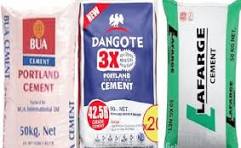
According to Agora Policy, the disconnect between surplus capacity and high prices has translated into unusually strong profitability for the country’s three dominant cement producers — Dangote Cement, Lafarge Africa and BUA Cement. The think tank estimated that average operating profit margins in the sector stood at about 49 per cent as of September 2025, up sharply from around 30 per cent in 2024.
These margins, the report said, are significantly higher than those recorded in North America, Europe, Asia and most of sub-Saharan Africa, reinforcing concerns that pricing outcomes in Nigeria’s cement market are not driven by competitive forces.
“The contrast between excess capacity, high prices and strong profitability suggests that market structure — not costs — is shaping pricing outcomes,” Agora Policy said.
“Nigeria has built the capacity it set out to build, but the benefits of that achievement have yet to show up fully in prices paid by households, builders and government.”
Cement producers have often attributed high domestic prices to taxes, energy costs, transport bottlenecks and financing constraints, while noting that exported cement is cheaper because it is exempt from several local levies. However, the report argued that this explanation leaves a critical question unanswered.
“If costs are the binding constraint, why can Nigerian producers sell cement profitably abroad at lower prices than Nigerian households and builders pay at home?” the report asked, adding that the price gap points to the influence of market power alongside cost pressures.
Agora Policy traced the roots of the current market structure to Nigeria’s import-substitution policies of the late 1990s and early 2000s. At the time, the government deployed tariff protection, tax incentives, foreign exchange support and exclusive limestone concessions to stimulate domestic cement production.
While these policies succeeded in eliminating imports and expanding capacity, the report said they also produced a highly concentrated market dominated by three large firms, with limited room for effective competition.
“The consumption side of the original policy bargain — affordable prices driven by competition — has failed to materialise,” the think tank said.
It added that in industries with high fixed costs and significant barriers to entry, continued capacity expansion can serve a defensive purpose by deterring new entrants. Excess capacity, the report argued, should be seen not as an anomaly but as a strategic tool that allows incumbents to temporarily expand output or cut prices to discourage competition.
Despite surplus production, dominant producers continue to exercise pricing power through a combination of scale advantages, control over limestone deposits, excess capacity that raises entry risks, and regional market segmentation driven by high transport costs.
Agora Policy noted that cement markets in Nigeria operate largely on a regional basis, enabling producers to charge higher prices in areas where logistics constraints limit consumer choice. The report cited international studies showing that high transport costs, exclusive access to raw materials and concentrated market structures can sustain elevated prices even in the absence of explicit collusion.
Beyond pricing dynamics, the think tank warned that high cement prices have broad economic consequences, describing them as a “hidden tax” on housing and infrastructure.
“Cement is a critical input into housing, roads, schools, hospitals and factories. When prices are high, fewer homes are built, infrastructure projects cost more, and governments do less with limited budgets,” the report said.
Agora Policy argued that reopening cement imports would not offer a durable solution, noting that cement is bulky, costly to transport and poorly suited to sustained import competition, particularly in inland markets.
Instead, the organisation called for competition-focused reforms aimed at restoring balance in the sector. These include opening access to limestone deposits, treating logistics constraints as a competition issue, addressing regional dominance, and strengthening oversight by the Federal Competition and Consumer Protection Commission (FCCPC).
“Nigeria’s cement challenge is no longer about building capacity but about restoring competition,” the report said, adding that the gains from industrial policy have largely been captured in profits rather than passed on to consumers through lower prices.
The think tank warned that without stronger competition safeguards, policies designed to nurture domestic industry risk entrenching market dominance at the expense of affordable housing, efficient infrastructure delivery and inclusive economic growth.