

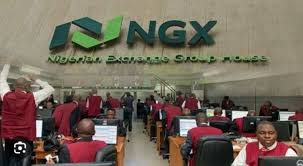
The Nigerian equities market delivered a historic performance in 2025, generating approximately N36.62trn in capital gains for investors, even as the economy contended with soaring inflation, foreign exchange volatility, and political uncertainties.
Data from the Nigerian Exchange Limited (NGX) showed that the benchmark All-Share Index (ASI) rose by 51.19 per cent year-to-date, climbing from 102,926.40 points at the start of the year to 155,613.03 points by year-end—a record in the history of the local bourse.
Market capitalisation mirrored the bullish trend, surging from N62.76trn to N99.38trn, reflecting growing investor confidence in the domestic market and a rising preference for equities as a hedge against inflation.
Analysts attributed the impressive performance to a mix of government policy reforms, monetary easing, and robust domestic investor participation.
A major catalyst was the capital-raising drive by Nigerian banks following the Central Bank of Nigeria’s (CBN) new minimum capital requirements, which mandated N500bn for international banks and N200bnlion for national banks. Many lenders responded with public offers, rights issues, private placements, and listings by introduction, injecting significant liquidity into the market and attracting fresh investments from both institutional and retail investors. Analysts noted that the recapitalisation wave not only boosted trading volumes but also strengthened banks’ capital bases, positioning them to absorb future shocks while enhancing investor confidence in the financial system.
Monetary conditions further supported the market’s ascent. With yields on money market instruments declining below 2024 levels, investors increasingly reallocated funds into equities to seek higher returns. Strong corporate earnings, particularly in the banking and consumer goods sectors, coupled with dividend expectations, provided additional momentum.
Chairman of NGX Group Plc, Dr. Umaru Kwairanga said the market’s performance underscores the importance of regulatory clarity, predictable policies, and stable macroeconomic conditions.
In his 2025 Capital Market Review and Forward-Looking Agenda for 2026, he disclosed that total market capitalisation of the Nigerian capital market, encompassing equities, bonds, and exchange-traded products, stood at N149.88trn as of December 24, 2025. Equities alone accounted for N98.89trn, representing over 65 per cent of total market capitalisation, supported by resilience across banking, consumer goods, industrials, and telecommunications sectors.
“Domestic investors continue to dominate trading activity, accounting for nearly 80 percent of transaction value, while foreign investors contributed about 20 percent,” Kwairanga said.
He acknowledged that foreign portfolio investment has improved year-on-year, with several periods of double-digit growth, but participation remains constrained by foreign exchange instability and uncertainties around capital gains tax and repatriation policies.
He stressed that sustained offshore interest will require coherent tax frameworks, transparent foreign exchange policies, and improved cross-border settlement efficiency.
Looking ahead, Kwairanga said NGX’s 2026 agenda is anchored on coordinated reforms involving investors, issuers, regulators, and market operators to deepen liquidity, strengthen market integrity, and enhance resilience.
He urged investors to adopt long-horizon, diversified strategies to support capital stability and highlighted the growing role of technology in expanding market access and investor engagement.
He also stressed that environmental, social, and governance (ESG) considerations have become central to attracting global capital and strengthening investor confidence.
Group Managing Director and CEO of NGX Group, Temi Popoola, reinforced the view that 2025 demonstrated the Nigerian capital market’s resilience despite domestic and global economic headwinds.
He stated that “the Nigerian capital market in 2025 demonstrated resilience despite domestic and global economic headwinds. This performance underscores the importance of policy consistency, purposeful reforms, and strategic collaboration in strengthening investor confidence and sustaining market growth.
During the year, efforts to advance economic reforms and improve market structures helped support a stable environment for capital formation, while our continued investment in technology played a critical role in expanding access, enhancing transparency, and improving operational efficiency across the market.
As we look ahead to 2026, NGX Group remains focused on deepening partnerships with regulators, issuers, market operators, policymakers, and the wider financial ecosystem to sustain this momentum. We are optimistic about the opportunities ahead and committed to positioning the Nigerian capital market as a key driver of economic growth and wealth creation, while advancing NGX Group’s vision as Africa’s preferred exchange hub.”
Popoola noted that technological investments enhanced transparency, operational efficiency, and access to the market, positioning NGX as a key driver of economic growth and wealth creation in Africa.
Corporate sector voices also highlighted earnings as a critical driver of market performance. Executive Vice Chairman of Hicap Securities Limited, David Adonri, pointed out that strong half-year results from companies, especially banks, provided a lift to equities during earnings season, helping maintain the upward trajectory.
He noted that investors are increasingly looking beyond short-term political risks, demonstrating a forward-looking approach that continues to fuel market optimism.
Similarly, Managing Director of Arthur Steven Asset Management Limited, Mr. Olatunde Amolegbe, emphasized the growing influence of domestic investors in shaping market behavior.
“The increasing dominance of local investors has naturally reduced volatility and enhanced market resilience,” he said.
Amolegbe added that recent government reforms aimed at attracting foreign investment and stabilising the economy have strengthened investor optimism, noting that equities remain attractive even amid inflationary pressures.
Market analysts noted that the remarkable year-to-date performance reflects a maturing market with stronger domestic participation, improved liquidity, and renewed confidence in the long-term outlook of the Nigerian economy.
Despite macroeconomic and political challenges, the 2025 performance cements Nigeria’s position among Africa’s best-performing bourses, showcasing a market increasingly underpinned by robust investor participation, strategic policy reforms, and resilient corporate performance.